Saturday, May 14, 2016

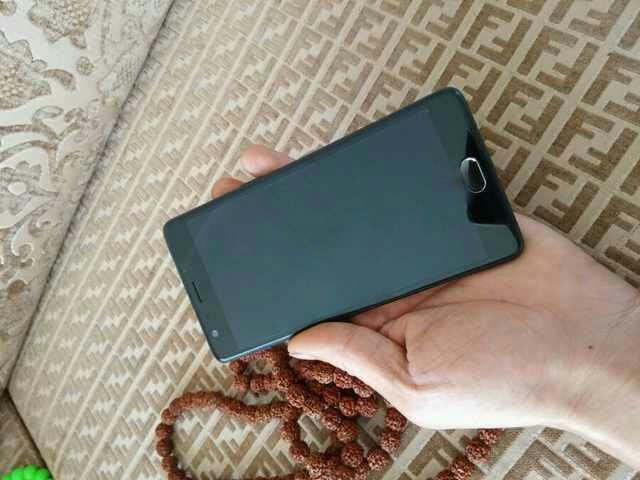
OnePlus 3 leaks confirms USB-C, leaves the back of the phone

Unknown


What do we know about the OnePlus 3 so far? Well, it’s going to be here soon in one of many boxes. There’s some form of fast charging on the thing. And the rest is pretty much all TBD.
Cross USB Type-C off that determinations list, though. @the_malignant on Twitter, typically on the HTC side of the leaksphere, has what is ostensibly our first clear view of the front and bottom of the OnePlus 3.
View image on TwitterView image on Twitter
 front & bottom "I omit the rear side 'cause is not the retail shape ; ) "
Okay, the back may not be ready for showtime, but these two sides give enough away already. For one, we see a firm USB-C port down low. Second, we don’t see much iteration happening with the front panel design from the OnePlus X and OnePlus 2, save for that button that likely will be a fingerprint sensor.
We did wish that we saw some OnePlus One design verve, but we’re apparently past that now.

Via: GSMArena

Androids crash way more often than iPhones, Galaxy S6 leads shame list

Unknown

Beyond matters of personal preference, like how an OS looks or subjective brand reliability, what tends to separate Android devices and iPhones in the eyes of many is security and software stability. Well, pricing too, but let’s leave that aside for a moment.
Unfortunately, there’s no fully dependable scientific method of finding out which platform is less vulnerable to glitches, and what phones have the highest failure rate. At least as far as the latter is concerned, though, “leading provider of mobile device diagnostics and secure data erasure solutions” Blancco aims to supply precious insight in quarterly reports.

Android failure rate Q1

The Q1 2016 numbers are now in, and unsurprisingly, Android retains the infamous title of most crash-prone mobile OS. The percentage of Google-powered phones that failed in Blancco’s tests (44 percent) is not only staggeringly high, but also close to double the competition’s 25 percent score.
Of the almost one in two Androids that floundered in the three months covered by this study, 7 percent were unreliable Samsung Galaxy S6 units, 6 percent were S5s, and another 6 Lenovo K3 Notes.
iOS failure rate Q1
Clearly, the S6 and S5 top the disgraceful ranks not because they’re unusually buggy, or not just due to that reason, being in high demand among smartphone users worldwide. That’s not exactly the case of the K3 Note, or the fourth-placed Moto G (3rd gen) for that matter, so it’s probably wise to stay away from those particular models.
In terms of specifically what tends to fail on both iOS and Android handhelds, you could be looking at camera trouble, which is the leading global crash cause, followed by touch issues, battery charging, microphone, and dual SIM instability.
Source: Blancco Technology Group
Via: PhoneArena, BGR

Sunday, May 8, 2016

Android N To Release In September This Year !!

Unknown
Image - Android Authority
If reports are anything to go by, Android N will be released in September this year.
According to latest reports, Android N is still in the beta phase. In the last months, several users have been testing it in this form on different devices and they are extremely happy.

 A schedule for the beta preview as well as the final build launch has been published by the software giant Google.

1. Android N developer preview 3 (beta) is scheduled for May
2. Android N developer preview 4 (with SDK and APIs) is scheduled for June
3. Android N developer preview 5 (near-final build)  is scheduled for July
4. Final Android 7.0 AOSP build is scheduled for August or September

Reports suggest that the Nexus devices will be the first one to receive the Android N operating system.
Here is the Android N release news for HTC, LG, Huawei, BlackBerry and Samsung.
The HTC One M9 received the Android Marshmallow update in December 2015. Rumors are doing the rounds that the HTC 10 will receive Android N update in December this year.
The electronics company LG has been very quick when it comes to updates. According to reports, the company will roll out Android N on its devices during Christmas.

Chinese smartphone manufacturer Huawei made an update for Android M at one month after its release. According to reports, the Chinese company will update its Mate line in November this year. Reports also indicate that the Huawei Mate 8 and Huawei P9 will get the update during December.
BlackBerry was extremely slow with its Android M update. It is more focused on securing Google's platform and improving the complete experience of using the software on its present PRIV model. Reports suggest that the company may roll out Android N to itsBlackBerry phones in 2017.

Last year, the tech giant Samsung took 5 months to sort out its first Android M update. Android Marshmallow released in September and the company rolled out its first update to the Verizon's Galaxy Note 5 in March this year, SamMobile reported. It is expected that Samsung Galaxy S7 will get the Android N update in 2017.

OnePlus 2 Oxygen OS 3.0 Final Will be out in coming weeks | Staff Member Adam Krisko

Unknown


Adam KriskoCommunity Manager/AdminStaff Member


Adam Krisko, Yesterday at 11:51 AM :
Hey everyone, we're actively working on the OTA, but we're still at least a few weeks away from pushing it out. Right now we're working on field testing and battery optimization, and we do have Jira tracking on the rest of the bugs you have been reporting. The ROM team will update you when they have more information. I want to thank everyone in the community who has been providing feedback. It's been extremely helpful.


This was the Post From Oneplus official Forum .
After Releasing Oxygen os 3.0 Beta on end of Q1 Oneplus has now Officially confirmed that Oxygen Os 3.0 Will Be Released after few Weeks. 
Following The Forum, Consumers were unsatisfied By the Attitude of Oneplus Staff members for not communicating with them.


Lets have a Look On Some Angry Users quotes:-

sakivgLevel: Éclair


FileHippo Smashes The 3,000,000,000 Download Barrier

Unknown


Yep, that’s right, FileHippo passed a very significant milestone recently.

Last month we officially passed the 3 billion download mark, and if you don’t mind us saying, we do feel quite proud of that figure.


Where It All Began

FileHippo.com was started by two software enthusiasts in 2004. We’re really proud of what we have achieved over the past 12 years. Our aim was to create a site that was trusted by software enthusiasts and to have a reputation for offering software updates, expert reviews, and news of the best freeware and shareware apps in the market for Windows and Mac OS. We’d like to thank all our users for their continuing support!

Moving Forward

FileHippo continues to hand-pick all software listed on the site so that users can be sure they are downloading the best programs available! In order to keep providing safe and clean downloads, we have teamed up with Avira to give each program a safety guarantee so that our users can download with confidence. Of course, we couldn’t have come this far without our valued users, so we want to say a huge thank you to everyone for their support – here’s to the next billion downloads!
We’re working on some exciting new features so stay tuned!

Thursday, May 5, 2016

OnePlus 3 with 4GB RAM expected to cost less than OnePlus 2 with 3 gigs

Unknown


Part of the outstanding buzz surrounding OnePlus phones a while ago seems to have ironically fizzled out as marketing controversy died down and invite-based sales gradually transitioned towards normal, open practices.
The device manufacturer was probably not among the world’s top ten in shipment figures last year, as it no doubt hoped, and both domestically and internationally, brands like Huawei, OPPO, Vivo or Meizu appear to be growing at a much faster pace.
In response, OnePlus reportedly plans to do what it knows best in a few weeks, unveiling yet another ridiculously affordable “flagship killer.” Only this time, the quality – pricing ratio might well exceed your wildest dreams.
Rumor has it the OnePlus 3 will set you back the equivalent of $310 (2,000 Yuan) with 4GB RAM in tow, 32GB internal storage space, Snapdragon 820 processing power, a 5-inch Full HD display, 16MP dual-LED flash rear camera, 8MP selfie shooter, USB Type-C connectivity, fingerprint recognition, and even NFC support. Basically, everything but the kitchen sink for a fraction of Galaxy S7, LG G5 or HTC 10’s MSRPs.
Compared to the OnePlus 2, the OEM’s next big thing should thus be around 20 bucks cheaper with an extra gig of memory on deck, plus twice as much digital hoarding room, 3 extra megapixels for both main and secondary cams, and NFC-enabled at last.
If that doesn’t impress you much, perhaps hearing a top-of-the-line OnePlus 3 variant with 6GB RAM and a 64GB ROM is also in the pipeline will do the trick. Its price of course remains a mystery, but it can’t possibly go over the $450 mark. Even $400 is a viable guess… and the stuff the sweetest dreams of Android power users are made of.
Source: GizmoChina

There’s 20W fast charging on the OnePlus 3, but what’s it called?

Unknown


The OnePlus 3 has received its China Compulsory Certificate and we’ve found out that it supports a 5V, 4A charging standard. It does come as an about face for OnePlus, a manufacturer that hasn’t embracedQualcomm’s Quick Charging standard in its phones. But be prepared to not be surprised once the dots get connected.
oneplus-3-fast-charging-ccc
While Quick Charge 3.0 does support up to 20W of power, there’s word of the standard being OPPO’s Super VOOC. Many associations have been drawn between OPPO and OnePlus with some speculators saying that OPPO owns, has ultimate control or some overbearing influence on OnePlus. We’ll have to see.
Perhaps all of this could explain the “Dash Charge” trademark OnePlus has filed for.
Source: GizmoChina
Via: The Droid Guy

Report: India won't let Apple sell refurbished iPhones in the country

Unknown

If Apple wants to prove Wall Street wrong, overturn tumbling profits, raise iPhone sales numbers again, and recover major lost investors, it definitely needs big wins in the world’s two largest handheld markets.
Especially in India, where the industry’s growth potential far exceeds that of saturated China and the US, with Android OEMs however the main beneficiaries of local mobile tech expansion, as the vast majority of consumers remain strapped for cash or simply unwilling to spend small fortunes on new iPhones.
There are of course ways to boost Apple’s brand recognition and box-office performance around those parts, including the recently authorized construction of official retail stores, and SE discounts unlikely to materialize for reasons we don’t get.
But the icing on the India-penetration cake were supposed to be refurbished iPhones, which the telecommunications ministry apparently thwarted following strong, vocal opposition from a coalition of iRivals, headlined by Micromax, Intex, Samsung and Karbonn.
Their number one complaint was that, across other industries, pre-owned foreign products are effectively banned by absurdly high taxes, and ditching or lowering the levies traditionally imposed on car manufacturers and so on would not only be unfair but essentially turn the “Make in India” program into “Dump in India.”
The arguments must have been compelling enough to deny the local smartphone market massive short-term growth for the long-term prospect of getting even more companies like Lenovo, Xiaomi, Huawei, OnePlus and Asus to invest large sums of money into India-based factories and R&D facilities.
Who knows, maybe Apple will follow suit someday if it truly wants to crack every single important tech-centric region.
Source: Bloomberg

Hacker collects 272m email addresses and passwords, some from Gmail

Unknown
Email services including Gmail, Yahoo Mail and Hotmail have fallen victim to a hack, exposing usernames and passwords for millions of users. According to Reuters, a huge data breach consisting of some 273.3 million online accounts has been reported by security expert Alex Holden of Hold Security. All told, the data breach contains 57 million accounts for the Russian email provider Mail.ru, along with 40 million Yahoo Mail credentials, 33 million Hotmail accounts and 24 million Gmail accounts.
In addition, the breach reportedly contains hundreds of thousands of German and Chinese email addresses as well as thousands of username / password combos that appear to belong to employees from US banking, manufacturing and retail companies.
Hold Security apparently came upon this data directly from the hacker, who was selling the data set for the curiously low sum of less than $1. Holden instead told the hacker that he would post "favorable comments" about him in various hacker forums; that was enough to get the hacker to turn the data over. About ten days ago, Hold Security started informing the companies affected of the data breach; the company's policy is to return stolen data to the companies affected.
It's worth noting that while tens of millions of Gmail, Yahoo and Hotmail accounts were affected, the total percentage of accounts compromised compared to the total in circulation is relatively small. Google recently announced that more than one billion people are using Gmail, for example. But given people's propensity to reuse passwords, this breach could have wider-reaching effects. Either way, better safe than sorry -- if you haven't changed your password recently, now is as good a time as any. Also, turn on two-factor authentication!

Friday, January 29, 2016

Lenovo CEO promises “innovative,” “attractive” Moto phone for July

Unknown


Earlier this month, in the middle of CES, panic swept over long-time Motorola phone fans: was Lenovo killing off the Motorola brand as we knew it? Calmer minds quickly prevailed, and the shape of story subtly shifted: sure, we wouldn’t be seeing “Motorola” splashed prominently across future handsets, but we hadn’t been for some time anyway, and the retention of the “Moto” brand, even if in the form of “Moto by Lenovo” would help upcoming models keep some connection to the past. Still, there’s an understandable undercurrent of anxiety to all this, and a lot of users might sleep just a bit easier having seen the next Moto handset arrive without incident. Today we get a sense for just when that might happen, as Lenovo CEO Yuanqing Yang talks about plans for new Motorola hardware due near the year’s mid-point.
Speaking at Davos this week, Yang indicated that a Moto smartphone that presents shoppers with a “more innovative, more attractive” handset option is currently in the works for a July launch.
That would fit nicely with the timing we’d expect for a new Moto X-series device, after last July’s launch of the Moto X Style and Moto X Play (alongside the latest Moto G). Unlike with those models, this time it sounds like a US release will be the company’s priority.
Should we latch on to the way Yang only appears to be talking about a single device, and not the spread we got last year? Perhaps, but this isn’t really a formal announcement, and it might be premature to squeeze too much analysis about this one brief comment. For now, we’ll look forward to July with the expectation that something big is coming, and see if more details don’t come to light as summer starts getting closer.

Amazon India teases Moto X Force

Unknown


Life in India is tough. It’s hot, it can get cramped and the days are longer are harsher for more people than in most other parts of the world. And everyone’s getting online with a smartphone. What would it be like if people didn’t have to worry about having their phones smashed to bits?
We may find out soon enough as Amazon.in has a splash page up telling how the Moto X Force is “Coming Soon” with the “World’s first shatterproof display.” That’s all we know. Users will get updates on availability if they sign-in to their Amazon.in accounts.
As you’ll recall, we reviewed what turned out to be the US-exclusive version of the Force, the Verizon-lockedDROID Turbo 2. That phone goes for nearly $624 (Rs. 42493) at the carrier while the Moto X Force from Motorola Mexico is tagged at 10,499 pesos ($573 or Rs. 39009).
To be belated for sure, may the Force be with you if you’re looking forward to this one.

PlayStation sells well (again), but mobile is hurting Sony

Unknown


Sony made money. Again! The company saw in tiny increase (0.5%) in sales compared to the same quarter last to 2,581 billion yen (or $21.5 billion), but income now stands at $1.69 billion. This quarter's financial results was yet more balancing (and canceling) out of Sony's many moving parts -- profitable and not. Gaming and Motion Picture arms saw increases in sales, but these were cancelled out by woes in Mobile and Devices arms. Once a positive part of the company's earnings sheets, Sony's smartphone camera sensors saw a decrease in sales -- reflecting the tough times that all companies are experiencing with phone sales. The company seems to be stabilizing its giant electronics ship.
Sony says operating income increases were apparently was due to refining and cutting across Sony's various electronics arms. (Read: less smartphone models, less TV models, better products). The company's restructuring costs have also started to tail off: this year charges cost $61 million — roughly a 50 percent drop.
Firstly, mobile: Sales decreased 14.7 percent compared to the same period last year — Sony says this is borne out from it's decision not to pursue scale in mobile phones for profitability, and why operating income improved significantly for the section. A significant decrease in image sensor sales is where Sony felt the bite most this quarter. Camera sensor sales to other smartphone manufacturers dropped by 12.6 percent year on year. This resulted in a quarterly loss of $97 million, compared to a profit of $445 million the period before.
A significant decrease in image sensor sales is where Sony felt the bite most this quarter.
Cameras saw a sales decrease of 5 percent, yet operating income increased, thanks to what Sony says is a better mix of cameras and video cams. Cost reductions and a better selection of products was also heralded for $260 million income increase in Home Entertainment — despite a sales decrease of 4.3 percent. 

In all things PlayStation, the company saw a 10.5 percent increase in sales, now reaching $4.9 billion. Compared to Q3 last year, income was also improved,as the arm didn't have to pay for a write-off of Vita hardware which happened last year. 

Thursday, January 28, 2016

AT&T-bound Samsung Galaxy S7 model now benchmarked with Snapdragon 820

Unknown


With less than a month to go until the presumed announcement of the Galaxy S7, Samsung’s pre-release testing of multiple “next big thing” configurations has to be in full swing. That’s corroborated by several visitspaid to several benchmarking authorities in recent weeks, the latest of which sees the SM-G930A model rated for single and multi-core speed in Geekbench.
This is without a doubt the standard, flat Samsung Galaxy S7 designed specifically for AT&T use stateside, and unlike the Canadian SM-G930W8 version, it appears to pack a quad-core Qualcomm Snapdragon 820 processor.
The beefed-up and, hopefully, cucumber cool SD810 sequel comfortably beats the Exynos 8890 in single-core performance, but yields the multi-core battle, 4,979 points to 5,946. The gap is certainly large and worrisome for both the San Diego semiconductor giant and American fans of Samsung flagships, yet it’s probably far from conclusive.
There’s no way to know how close to completion the two prototypes were when put to the tests, and besides, we’ve already seen SD820 reference devices exceeding these scores by a lot.
Bottom line, you should stay calm and wait to check out the final GS7 in the flesh, with 4GB RAM clearly on tap, and Android 6.0.1 Marshmallow pre-loaded. Also, expandable storage, a familiar but attractive design,Quad HD screen resolution, water resistance, and an answer to 3D Touch.
Source: Geekbench
Via: G for Games

Latest LG G5 rumors return to idea of Magic Slot accessory expansion

Unknown


If you’ve been keeping an ear to the LG G5 rumors stemming back the past several weeks, it’s easy to come away with the impression that the phone we’re about to see launch is one that may be the G5 in name only, taking some big steps away from the sort of hardware we became familiar with in phones like the G3 and G4. Big changes may include abandoning the classic rear volume controls, to say nothing of the unusual slide-out battery design that’s been teased. One of the more unusual rumors to emerge suggested that LG could give the phone a multi-purpose expansion port, dubbed the Magic Slot. We haven’t heard much about that idea since it was first rumored in the last days of 2015, but now it finally resurfaces in a new report, with an additional source adding corroboration to the feature.
We’re still not hearing much about the physical makeup of this port, nor about the sort of accessories LG might have envisioned for its use, but we do get a small update about possible placement, with word that LG could integrate the Magic Slot into the G5’s bottom edge.
What would that mean for a slide-out battery, presumably using that same bottom edge for its battery door? Well, like we said when first considering that construction, it still might be possible to retain port functionality, even if that complicates the engineering a little.
It also sounds possible, based on the wording of this most recent report, that there’s some sort of overlap between that slide-out battery and the G5 Magic Slot – could the battery itself be integral to Magic Slot functionality?
What if instead of the phone’s bottom edge acting as a cover for this slot, that’s instead how Magic Slot accessories take shape, swapping the component with replacements that deliver additional functionality? While that admittedly sounds a bit complicated, it also might make for a nice resolution that manages to combine several of these G5 rumors into a single cohesive vision for the handset’s design.
Source: The Verge

Apple may finally be ready to go dual-camera with the iPhone 7 Plus

Unknown


There’s a big temptation in mobile tech for manufacturers to be among the first to identify the next hot technology and give it to their users before the competition’s got time to catch up. Recently we’ve seen features like fingerprint scanners placed front and center, a great example of tech that’s been around for a while, but has only recently matured to the point where it works as well as it needs to – and shoppers are asking for it. Phones that employ multiple camera sensors have similarly been around for a while, but often to little fanfare (who went shopping for the One M8 specifically because of the Duo Camera?) – at least so far. But now we’re looking at possible dual-camera setups on some upcoming high-profile handsets, phones like the LG G5; is it finally time for that tipping point when manufacturers make this a must-have feature? Could be, as rumors look to the idea of Apple building an iPhone with dual rear cameras.
Talk of Apple experimenting with dual-camera setups is nothing new, but are we ever going to see the feature emerge on a commercial device? At least one industry analyst thinks so, and points to the iPhone 7 Plus as the handset likely to introduce such a system.
Reportedly, Apple could give the iPhone 7 Plus multiple camera sensors in an effort to super-charge imaging performance with such tricks as a simulated optical zoom mode, using tech the manufacturer picked up when acquiring LinX Imaging.
But rather than the iPhone 7 Plus simply being the dual-camera iPhone, we hear that there could be multiple editions of the handset: one with this extra camera, and one with a single rear sensor. That could be a practical consideration of Apple’s, dealing with a scarcity of dual-camera modules. Does that spell even further fragmentation of Apple’s growing smartphone lineup – maybe even separate branding for the dual-camera edition? We don’t know yet, but we’ve still got months and months to track down those answers.
Source: MacRumors
Via: The Verge

Facebook's growth is apparently unstoppable

Unknown


Facebook continues its upward trajectory with a very successful fourth quarter last year. Today, the social network reported that it had a revenue of $5.84 billion and had about 1.59 billion monthly active users in last quarter alone. This is a decent increase over the previous quarter, where it had 1.55 billion users, and an impressive 14 percent increase over this time last year. And that $5.84 billion? It's a whopping 52 percent increase year-over-year. Taken as a whole, that means Facebook had a revenue of $17.93 billion in 2015, which is a 44 percent increase from 2014.
As always, a good chunk of that money comes from mobile: About 80 percent, to be exact. Which isn't surprising, considering that Facebook also enjoyed 1.44 billion mobile monthly users last quarter. What's even more impressive is that Facebook kept the trend for daily active users -- as of last quarter, an average of 1.04 billion people used Facebook every day, and 934 million of those people were on mobile.
On the earnings call, CEO Mark Zuckerberg went further into a few details. He said that more than one billion people used Facebook's Groups last year, and brought up the trend of folks using the social network to connect over the big events of the year like the refugee crisis and the Paris attacks. In particular, he said that more than 950 million people used a Safety Check feature to let folks know they were safe. He also said that 500 million people use the site for Events every month and about 123 million events were created in 2015.
Much of the growth last quarter also had to do with Facebook connecting the developing world. Zuckerberg said that 80 million people useFacebook Lite, which is the lightweight version of the site for less sophisticated mobile phones. COO Sheryl Sandberg also pointed to the recent efforts made to increase video advertising for lower bandwidth mobile devices, which tend to be more prevalent in those countries.
Speaking of video, Zuckerberg said that video continues to be an "important part of the Facebook experience" and will invest more in the area. He said that people have watched over a 100 million hours of video on Facebook and the company is working on ways for users to discover even more. There could even be a dedicated section for people who justwant to watch videos, he said.
Of course, Facebook is more than just the big blue app; it also ownsWhatsapp, Instagram and there's Messenger too. Last quarter, the company reported that Whatsapp now has 900 million users, Instagram has 400 million users and Messenger has 800 million users. The Messenger platform seems especially intriguing, as it's now more than just a place for conversations -- Facebook is now testing it so you could use it with the M digital assistant and you can even order transportation through it thanks to a partnership with Uber. Zuckerberg said that the company is even working with airlines so you could potentially check-in with a flight reservation just by using Messenger.
Last but certainly not least, it's also worth noting that Facebook owns Oculus. Zuckerberg has said he's very pleased with the initial reactions to products like the Samsung Gear VR as well as the new consumer-grade Oculus Rift, which has recently announced its pre-order price. "VR is going to be a big area of investment for us. It's going to change how we're going to communicate, work and play games," he said. "We're off to a good start."