Saturday, January 9, 2016

Moto 360 Sport finally available stateside from its manufacturer

Unknown


Unveiled way back in September alongside a standard, non-GPS-packing but slightly more stylish version, the Motorola Moto 360 Sport was inexplicably kept on the sidelines for all this time. At long last, it expanded from Europe to America’s largest wireless carrier yesterday, and now it’s up for grabs through the manufacturer’s own US e-store too.
Unfortunately, Motorola isn’t in a generous mood when it comes to the sporty smartwatch, selling it for the same $300 as Verizon, and at least for the time being, neglecting to include it in any smartphone bundle deals.
Coated in your choice of white, black or “flame orange”, the Moto 360 Sport features a 1.37-inch “AnyLight” hybrid display with 360 x 325 pixels resolution, and comes in only one diameter – 45mm.
Far from the world’s prettiest wearable device, the fitness-centric Android soldier tips the scales at a featherweight 54 grams, and thanks to built-in GPS support, it doesn’t need to stay close and connected to a handheld at all times.
Designed to last and deal with your active life, the 360 Sport also withstands dust and water interaction (not full immersion, though), and promises “up to a full day of mixed use with Ambient on” between charges. Overall, it’s bound to pique the interest of amateur and professional athletes, but it may require a $50 or so discount to gain a foothold in the uber-competitive wearable décor.
Source: Motorola US

'Metal Gear,' 'The Witcher 3' lead game developers' nominees

Unknown


You probably have a short list of favorite video games from 2015, but what do you think game creators would pick if given the chance? You don't have to wonder: the Game Developers Choice Awards has delivered its nominees, and there are a few clear front-runners this time around. For one thing, third-person action is definitely in vogue: Metal Gear Solid Vand The Witcher 3 were both nominated for four awards each, including game of the year. A few other well-known games also received multiple nods, including Bloodborne, Fallout 4 and Splatoon.
And don't worry, some of the bigger indie titles are in the running as well.Her Story and Undertale received three nominations each, while cult hits like Keep Talking and Nobody Explodes found their way on to the chart. You'll have to wait until the actual awards ceremony on March 16th (at the start of the Game Developers Conference) to find out which titles are the cream of the crop, but it's already reasonable to say that many devs share your tastes -- they're more interested in fun than technical wizardry.
Source: Game Developers Choice Awards

Friday, January 8, 2016

US internet speeds triple, but lag behind other countries

Unknown
If you've noticed that your home internet speeds got much faster in recent years, you're not alone... although you might not want to cheer just yet. The Federal Communications Commission has released a report showing that average American broadband download speeds tripled between March 2011 and September 2014, jumping from 10Mbps to 31Mbps. Sounds like a solid improvement, doesn't it? However, it pales in comparison to what the rest of the world gets. The US ranked 25th out of 39 countries in 2013, trailing behind the likes of Canada, Luxembourg and Japan.

Officials pin the mixed results on huge gaps in technology. The rollouts offiber internet access and faster cable hardware has increased the peak performance you'll see on some providers, but DSL service is largely stagnant -- you probably won't get more than 12Mbps. In other words, networks like AT&T and Verizon are at once pushing broadband forward (through fiber options like GigaPower and FiOS) and holding it back (by continuing to depend on DSL).
Those internet speeds might be needed, too. The FCC estimates that video represents over 60 percent of internet traffic, and it figures that streaming clips could take up as much as 80 percent of traffic by 2019. Those gigabit internet rollouts over the next few years may be crucial to enjoying 4K and other bandwidth-intensive video services coming in the near future.
[Image credit: AP Photo/Erik Schelzig]

Friday, January 1, 2016

SpaceX's first reusable rocket is back in its hangar

Unknown


As a reminder of one of 2015's greatest accomplishments, SpaceX founder Elon Musk posted one more picture (embedded below) of the record setting Falcon 9 rocket it launched to space and then landed again at Cape Canaveral. Now the rocket is back in its hangar and after showing no damage from its trip, is "ready to fire again." That bodes well for future launches, but it's unlikely to happen for this unit. After the historic event, Musk told reporters "we will probably keep this one on the ground," and after testing will put it "somewhere." There's no word on which museum the rocket will end up in, but hopefully Musk knows our mantel is available.

Thinga is a kid-friendly search engine with parental controls

Unknown

The site looks to provide safe browsing for elementary school children.


Keeping kids away from questionable content while they surf the web is an ongoing battle, and there's a new site that's looking to help. Thinga, a kid-friendly search engine, offers answers to children's queries from the company's own content library, white-listed sites or privacy-minded search site DuckDuckGo. Thinga comes from a Yahoo Kids alum who worked on that kid-focused project before it shut down a while back. Those search results are vetted by the team at Thinga to make sure they're appropriate.
This site is meant for elementary school aged children and organizes content in sections like Video, Cool and Animals if a user isn't looking for something specific. What's more, the search engine is compliant with the Children's Online Privacy Protection Act and boasts parental controls, too. While it's web-only for now, Thinga is accessible on mobile and there are plans for native apps.

Did the Android 6.0.1 update kill your battery life?

Unknown


Just imagine how rested you would feel if you had to wake up a hundred times an hour — all night long!
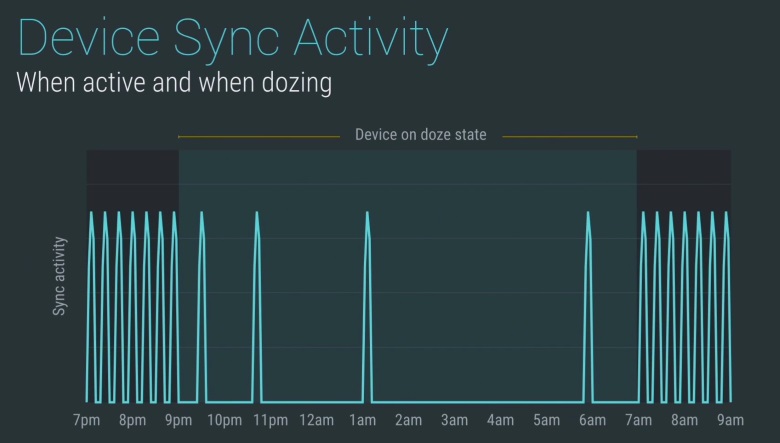
One of the most exciting new features of Android 6.0 Marshmallow goes by the name of “Doze Mode”. In general, Android is really good at multi-tasking. It can run a whole bunch of stuff all at the same time, and as long as your hardware has enough RAM and processing power, you’ll probably hardly notice that it’s doing a dozen or more things at once. The one area where you will notice this is in the frequency at which you’ll need to recharge your battery. The faster your processor cores run (and the longer they do so), the quicker your battery will run out – even when the screen is off.

Cats and Recipes and Tweets, Oh My!

Virtually every app that you have on your phone or tablet can request data from the Internet. Email can flow in frequently, Facebook has to check if someone’s posted an offensive meme, Twitter’s got to let you know all kinds of things in 140 characters or less, Instagram has pictures of cats that you need to see, Pinterest has a hundred new projects that won’t turn out anywhere close to the way the picture looks, six or seven guys are getting updates from Google+, weather apps are finding out the same information that you could get by looking out the window, and so on. Each of these requests has to wake up the phone, turn on the modem, access the Internet, get a response, act on that response, then go back to sleep. All that adds up!
Just imagine how rested you would feel if you had to wake up a hundred times an hour all night long! That’s pretty much what your phone or tablet is doing – even when you’re not using it and even when the screen isoff.
Doze Mode
Android 6.0 came with a new feature called “Doze Mode”. Put simply, Doze Mode takes all those requests for information and queues them together. Then, every so often, the device wakes up and handles all the queued requests, and goes back to sleep. Sure, those cats in your Instagram feed aren’t going to be as up-to-date all the time, but they should be there when you need them.
The benefit? Awesome long battery life while “dozing”. All was well in the land of Androids… and then came the Android 6.0.1 update.

Android 6.0.1


Users who have gotten the Android 6.0.1 update are reporting much shorter battery life than before the update. Others are reporting that Doze Mode doesn’t work any more. On both the Nexus 6P and Nexus 5X we’ve checked, something does seem awry.

Oculus pushes Rift Touch launch date to second half of 2016

Unknown


Oculus announced on its website Thursday that the Touch handheld controller accessories to its highly-anticipated Rift VR headset will be delayed to the second half of 2016. Pre-orders for the controllers will similarly be delayed. Oculus cites the need to "improve hand pose recognition" as the reason for the setback. The Rift headset itself is still on track for its Q1 release and its pre-order system will come online in the coming weeks. The company is reportedly also ramping up production ofits developer units to meet growing demand.
[Image Credit: Getty]